“Only Thirteen Years Old”
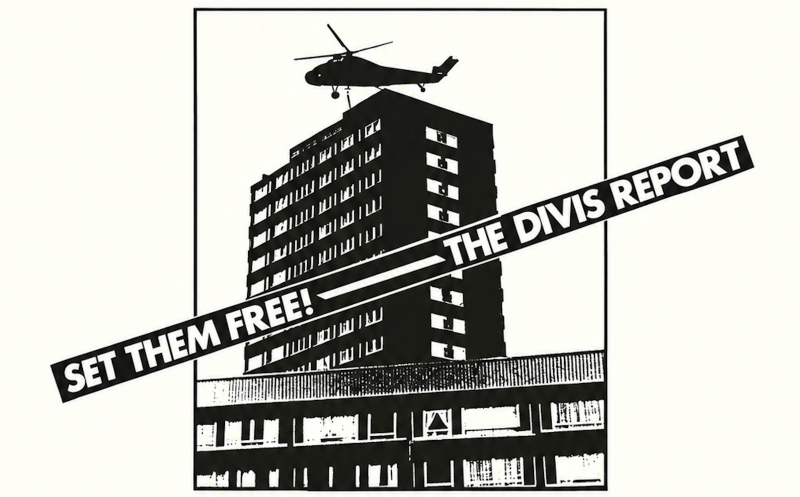
The Divis Flats complex, on the lower Falls Road in Belfast, was built in the late 1960s. Named for Divis or Dubhais, the ‘black ridge’, a hill and beauty spot north-west of the city, it held 850 flats for 2,400 residents, across the 19-floor Divis Tower and 12 seven-storey deck access blocks.
Content Warning
This story refers to child fatalities and includes potentially distressing material.The estate was still being built on 15 August 1969, when Patrick Rooney was shot dead by Royal Ulster Constabulary machine-gun fire in the flats. Patrick was nine. He was the first child killed in the Troubles.1
The local MP had said constituents were looking forward to the adventure of high-rise living. Instead, they got damp, broken lifts, nowhere for children to play, and the persistent feeling of being trapped. Within a couple of years of moving in, residents began campaigning for Divis Flats to be demolished. Of course, nobody listened. In Belfast in 1972, the political emergency swallowed the housing one whole.
The conflict became woven into the fabric of the building. From the early 1970s until 2005, the top two floors of Divis Tower were held by the British Army; the soldiers had a good view of the road below. They only accessed the building by helicopter. Meanwhile, for the residents on the floors below, everyday dangers ground on, in addition to the bullets and bombs. With nowhere else to play, the children who lived in the tower made the building their playground. Lifts were poorly maintained and their shafts easy to reach, and joyriding on top of them became a regular pastime. Everyone knew about it. This was not confined to Belfast – across the water it was a documented epidemic, children being killed or injured in accidents involving lift shafts and cranes and scaffolding from Glasgow to Newham. Not only that, but H.M. Coroners' records for 1973–77 found that children living above the first floor were 57 times more likely to be killed falling from their homes.2 At Divis, the difference was that these dangers were lost inside a war.
In November 1989, a thirteen-year-old boy was crushed in the lift shaft. The inquest was held eighteen months later. When investigators arrived, they could not work out how the children had been getting in; they had to ask the children to show them. It was only after the death that anyone investigated.3
By then, the demolition campaign had run for nearly two decades. The Lower Falls Residents Association had passed a single resolution at its first meeting in 1973: total demolition. In 1979, the Divis Demolition Committee began wrecking empty flats themselves. Its leaders were arrested, then given nominal fines by a judge who condemned the authorities for the state of the estate. Two blocks came down in 1984 for security reasons. In 1986, the Housing Executive agreed to the demolition of two further blocks.4[RG14]
In the remaining buildings, there was an issue with fire safety. Tenants were told they would lose part of a bedroom to make room for the construction of a ventilated corridor which was to be their only safe escape route in the event of a fire. The Executive insisted these were “minor improvements”.
On 29 July 1991, with eyes on Belfast due to the first Tall Ships festival in the harbour, the Federation of Tenants and Residents Associations (Greater Belfast) parked a caravan outside Belfast City Hall. They called it “Tall Ships to Tall Buildings”. Three men distributed thousands of leaflets bearing the slogan “Words are not enough, action speaks louder”. The Housing Executive was forced to issue fire safety leaflets, appoint a consultant, and check the status of every high- and medium-rise block.5 William Pollock, Chair of the Federation, knew they had found their lever. “We will continue to keep the pressure hose of publicity fully turned on the Executive,” he avowed.6
The same pattern of official minimisation that ran through Birmingham and Newham existed here too, under a different administration, during an armed conflict. The pattern transcended politics. Eventually, all twelve low-rise blocks were demolished – three in 1984, the last by 1993. Only Divis Tower still stands. The British Army left in 2005. In 2009, the observation post above the Falls Road became flats once again.7
- Nine-year-old Patrick Rooney was killed on 15 August 1969 by RUC machine-gun fire during the Belfast riots, the first child to die in the Troubles; the British Army occupied the top two floors of Divis Tower from the early 1970s until 2005.
- ‘Newham Tower Blocks Campaign: Information Sheet’, 1983 (WESA_2_5_03): H.M. Coroner’s findings; ‘Profile on Children in Blocks’, The View, Summer 1991 (TBUK2_001): children above the first floor 57 times more likely to be killed in falls; lift, crane and scaffolding deaths recorded across English and Welsh estates. An England-and-Wales figure; no equivalent was compiled for Northern Ireland.
- ‘Is Information Better Late Than Never?’ The View, Summer 1991 (TBUK2_003): the June 1991 inquest into the death of a 13-year-old crushed in the Divis lift shaft in November 1989 after joy-riding on top of the lift; investigators had to ask the children how they had been getting in; an investigation was held only after the death.
- National Tower Blocks Directory 1987 (TBUK2069, pp.46-47), 'Divis – The Worst Housing in Europe?': the Lower Falls Residents Association's 1973 demolition resolution; the Divis Demolition Committee wrecking empty flats from 1979, the arrests and nominal fines; two blocks demolished in 1984 (residents attributing it to security, not conditions); total demolition accepted in September 1986 after a sixteen-year struggle.
- ‘Tall Ships to Tall Buildings’, The View, Summer 1991 (TBUK2_001): the Northern Ireland Housing Executive's “only minor improvements” line; Divis tenants losing part of a bedroom for a ventilated corridor; the Federation of Tenants and Residents Associations (Greater Belfast) “Tall Ships to Tall Buildings” caravan at Belfast City Hall, 29 July 1991; the three concessions won.
- ‘Tall Ships to Tall Buildings’, The View, Summer 1991 (TBUK2_001): William Pollock, Chair of the Federation of Tenants and Residents Associations (Greater Belfast), quoted verbatim.
- The eight-storey blocks were demolished by 1993; the tower retained; the British Army observation post on the top floors vacated in 2005, the space returned to housing in 2009.
Related Archive Documents
Action Packs
Want to start a community campaign? Here’s a guide to forming or joining a residents’ association.
Successful campaigns need a strategy. Here's a toolkit.
Drumming up support in your community? Here’s a pack of editable resources, including flyer and poster templates.
Are you a tenant facing an emergency move from your block because of building safety issues? Here’s a guide to help you secure clarity about the future.