“The Cockroach Desk”
Cockroaches crawled in their cots. Over their beds. Through their food cupboards. The 1992 National Tower Blocks Network Directory reported that on a contaminated estate in Brent, children vomited cockroaches.1
In October 1985, His Honour Judge Honig had ruled at the North Kensington County Court that the insects were “dangerous to health, extremely unpleasant and distressing”. He was ruling on the case of tenants of the Lancaster West Estate – the largest estate in the Royal Borough of Kensington and Chelsea, housing 3,000 people. Cockroaches had first taken hold in the heating ducts in early 1980. Despite individual complaints and a joint petition, block treatments did not begin until a year and a half later.
The North Kensington Law Centre set up a cockroach desk in a local church hall and organised an estate-wide survey, with the support of Environmental Health Officers who volunteered from other London boroughs. In December 1982, a mass infestation was discovered, throughout the estate. In early 1983, the whole estate was declared a public health nuisance.
Eventually, the council appointed a specialist contractor. The yearly contract cost £7,000 and for that, the infestation was supposed to be eradicated. But it was not.
The Law Centre spent the next two years seeking compensation for the tenants. The council argued in court that the problem was under control, that it was down to unhygienic individuals, that there was a lack of access. All these arguments, the Law Centre noted in its 1986 annual report, had been laid to rest. Judge Honig found the council had not carried out eradication with due care; late treatment of the heating ducts, the wrong chemicals, failure to monitor progress, failure to involve tenants. He awarded tenants £1,100 compensation for the distress and inconvenience suffered. The victory would encourage tenants nationally to organise for effective pest control.2
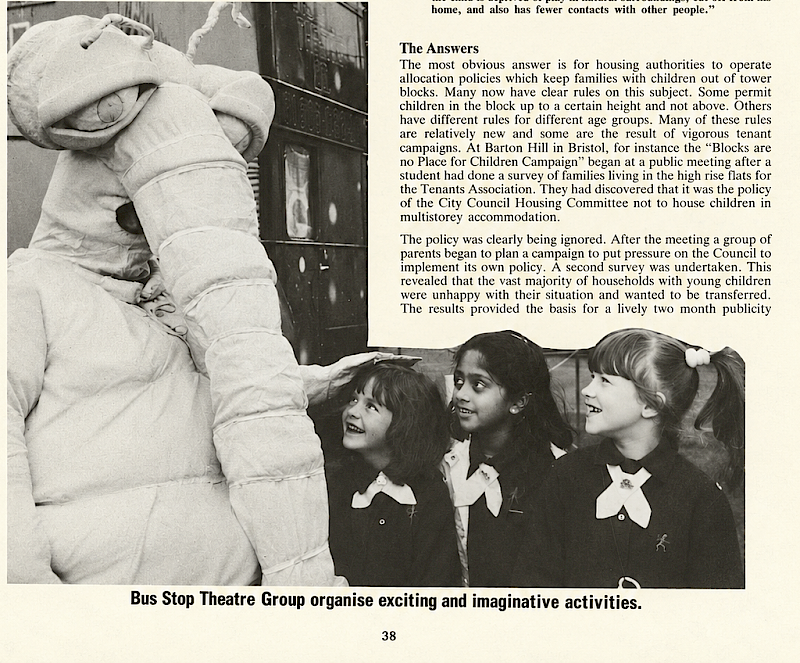
At least the cockroaches could be litigated against. More insidious was the effect the blocks had on the children who grew up in them. The Bus Stop Theatre Company ran a playbus of kids' shows and workshops around London's tower-block estates. The actors witnessed the children's emotionless indifference to where they lived, which would give way now and then to a wild excitement at the theatre that had come to offer them something else.3
The Lancaster West Estate in North Kensington – where the Law Centre set up its cockroach desk in a church hall, where tenants fought for two years for £1,100 compensation, where children lived with cockroaches in their cots and then breathed the toxic chemicals from pest control – is also the estate where Grenfell Tower stood.
- National Tower Blocks Directory 1987 (TBUK2072, p.53), 'Beating the Cockroaches'; National Tower Blocks Directory 1992 (TBUK2204, p.121).
- National Tower Blocks Directory 1987 (TBUK2072, p.53): Honig judgment; Lancaster West Estate; North Kensington Law Centre’s cockroach desk.
- National Tower Blocks Directory 1992 (TBUK2204, p.121), ‘A Child’s Life’; National Tower Blocks Directory 1987 (TBUK2072, pp.4-5), ‘Bus Stop Theatre Co.’
Related Archive Documents
Action Packs
Worried about pests and vermin in your block? Here’s a guide to your legal rights and next steps.
You can complain about pests and vermin to your landlord. Here's a letter template.