
Trace more than fifty years of warnings, evidence and action. Follow the events, campaigns and decisions that reveal how history shaped today's tower block safety crisis.

1940s
1945–1968
STORY
London
G

Prologue – “A Clean Slate”

“The reality was decaying, dingy cities where underfed people shuffled to and fro in leaky shoes, in patched-up nineteenth-century houses that smelt always of cabbage and bad lavatories.” 1
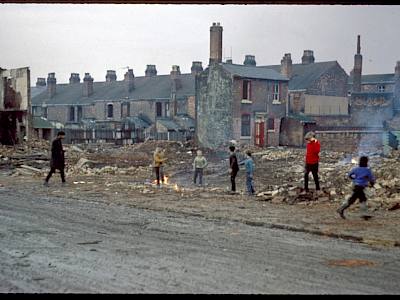
Anderton Street, Birmingham, 1960, photographed by Phyllis Nicklin. Credit: Creative Commons.
Read the whole story Prologue – “A Clean Slate”
Ministry of Housing, Whitehall / Newham / nationally
1945–1968
3 themes
3 related documents
Campaign
Cover-up
Fire and danger
Housing rights
Living conditions
People
Structural
1950s
1956–1984
STORY
Midlands
1

“Municipal Gomorrah”

Hugh Lynch was chairman of the Birmingham Tenants Federation. In 1984 he started uncovering a profiteering scandal with grave ramifications for the city’s high-rise blocks.

National Association of Bison Tenants news update. Credit: RIBA Collections.
Read the whole story “Municipal Gomorrah”
Birmingham / Newcastle / nationally
1956–1984
1 theme
6 related documents
Campaign
Cover-up
Fire and danger
Housing rights
Living conditions
People
Structural
1960s
1968–1971
STORY
London
2

“The Eyes of the World Are Upon Us”

Two days after Ronan Point collapsed, officials climbed to flat 90 on the eighteenth floor, where Ivy Hodge had been knocked unconscious. They were there on behalf of Home Secretary James Callaghan to calculate the force of the explosion.
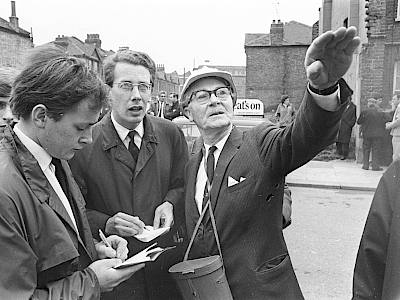
Newham's Borough Architect Thomas North speaks to journalists at the Ronan Point disaster, 1968. Credit: Alamy.
Read the whole story “The Eyes of the World Are Upon Us”
Newham Town Hall / Marsham Street
1968–1971
2 themes
4 related documents
Campaign
Cover-up
Fire and danger
Housing rights
Living conditions
People
Structural
1964–1985
STORY
London
3

“People in High Places”

George Fairweather was one of the few experts willing to testify, in public, that these towers were unsafe to build.
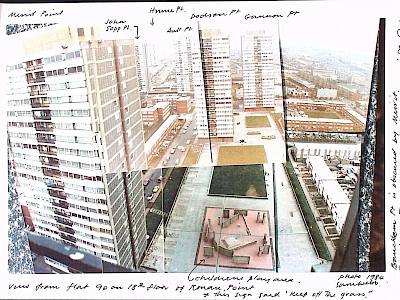
Sam Webb's annoted collage of the Freemasons Estate. Credit: Bishopsgate Institute.
Read the whole story “People in High Places”
Morris Walk, Greenwich / Wigmore Street, London / Marsham Street
1964–1985
2 themes
5 related documents
Campaign
Cover-up
Fire and danger
Housing rights
Living conditions
People
Structural
1968–1971
STORY
London
4

“Tumbledown Dick”

On the morning of 16 May 1968, Joan Littlewood and Gerry Raffles followed the sound of fire engines through Stratford. They arrived at Ronan Point to find the south-east corner of the building gone.
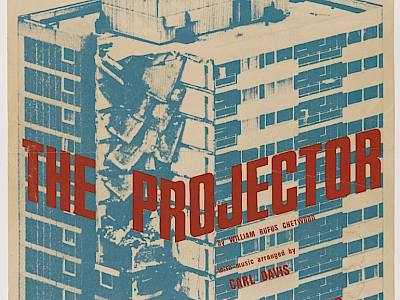
Theatre Royal Stratford East poster for The Projector, 1970. Credit: RIBA Collections.
Read the whole story “Tumbledown Dick”
Theatre Royal Stratford East / St Paul's Cathedral
1968–1971
2 themes
5 related documents
Campaign
Cover-up
Fire and danger
Housing rights
Living conditions
People
Structural
1968–1992
STORY
South of England
5

“Strength in Numbers”

Northam Estate was a post-war project built on the bombed dockside slums of Southampton. The mixed population had a tree-shadowed view of the wharfs and could hear the sounds of the port.

National Tower Blocks Directory, 1987. Credit: Bishopsgate Institute.
Read the whole story “Strength in Numbers”
Northam Estate, Southampton / Sheffield
1968–1992
1 theme
3 related documents
Campaign
Cover-up
Fire and danger
Housing rights
Living conditions
People
Structural
16 May 1968
STORY
London
6

“Don’t Look Down”

Harry Pumphrey stood by the door of his brand new nineteenth-floor flat, 91 Ronan Point, listening. The noise was like a high-speed drill on metal, travelling down the corridor from north to south. Who'd be making such a racket at 5:50am on a Thursday morning?1 What Harry didn’t know was that this was the sound of a building beginning to tear itself apart.
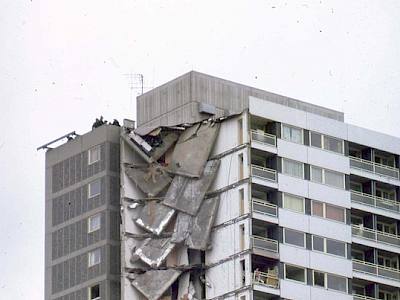
Ronan Point collapse, 1968, photographed by Derek Voller. Credit: Creative Commons.
Read the whole story “Don’t Look Down”
Ronan Point, Canning Town, Newham
16 May 1968
3 themes
5 related documents
Campaign
Cover-up
Fire and danger
Housing rights
Living conditions
People
Structural
1970s
1972–1991
STORY
Northern Ireland
7

“Only Thirteen Years Old”

The Divis Flats complex, on the lower Falls Road in Belfast, was built in the late 1960s. Named for Divis or Dubhais, the ‘black ridge’, a hill and beauty spot north-west of the city, it held 850 flats for 2,400 residents, across the 19-floor Divis Tower and 12 seven-storey deck access blocks.

Divis Flats Report. Credit: Bishopsgate Institute.
Read the whole story “Only Thirteen Years Old”
Divis Flats, West Belfast
1972–1991
3 themes
4 related documents
Campaign
Cover-up
Fire and danger
Housing rights
Living conditions
People
Structural
1980–1992
STORY
London
8

“The Cockroach Desk”

Cockroaches crawled in their cots. Over their beds. Through their food cupboards. The 1992 National Tower Blocks Network Directory reported that on a contaminated estate in Brent, children vomited cockroaches.1

Bus Stop Theatre. Credit: Bishopsgate Institute.
Read the whole story “The Cockroach Desk”
Lancaster West Estate, North Kensington / Bristol / nationally
1980–1992
4 themes
2 related documents
Campaign
Cover-up
Fire and danger
Housing rights
Living conditions
People
Structural
1980s
1981–1984
STORY
London
9

“The Tangible Benefits of Co-operation”

The Freemasons Estate had a reputation as the worst high-rise estate in the borough of Newham. Nine 22-storey tower blocks – one of which was Ronan Point – plus low-rise flats and houses. Virtually everyone was on the transfer list.1
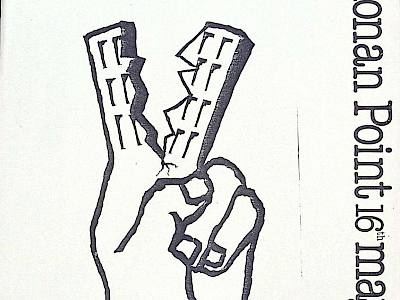
Newham Tower Block Tenants Campaign celebrates the forensic demolition of Ronan Point, 1986. Credit: RIBA Collections.
Read the whole story “The Tangible Benefits of Co-operation”
Gannon Point / Freemasons Estate, Canning Town
1981–1984
1 theme
2 related documents
Campaign
Cover-up
Fire and danger
Housing rights
Living conditions
People
Structural
1981–1983
STORY
London
10

“A Hell Hole”

April Merrin lived in Dennison Point, a 23-storey block on the Carpenters Estate in Stratford. She called it a “hell hole”. She had begged the council to move her – pleaded with Social Services, with Housing, with the local papers. She could not get a transfer.
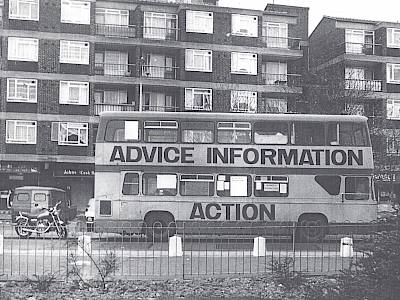
The Community Links bus on the Brooks Estate, 1980, photographed by Frances Clarke. Credit: Tower Blocks UK.
Read the whole story “A Hell Hole”
Dennison Point, Gibbins Road, Stratford, Newham
1981–1983
3 themes
3 related documents
Campaign
Cover-up
Fire and danger
Housing rights
Living conditions
People
Structural
1983–2019
STORY
London
11

“The Campaign”

Frances Clarke was a community worker at Community Links in East Ham with a core working principle: tackle causes, not symptoms. In 1981, she helped form the Newham Tower Block Tenants Campaign. This was a local fight, run by women, over the dangerous blocks of one London borough. 
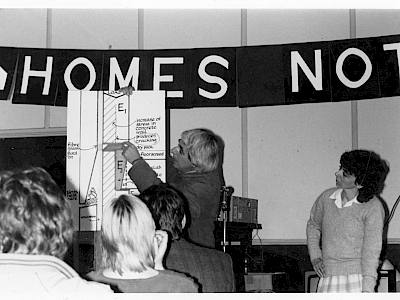
National Tower Block Conference, 1983. Credit: Bishopsgate Institute.
Read the whole story “The Campaign”
Community Links, East Ham / nationally
1983–2019
2 themes
4 related documents
Campaign
Cover-up
Fire and danger
Housing rights
Living conditions
People
Structural
1983–1988
STORY
London
12

“I Knew I Was Right”

Barry and Elaine Meekings were worried. Their flat at 26 Ronan Point had cracks up the walls. There were cockroaches, draughts, leaks, and disrepair in every room.
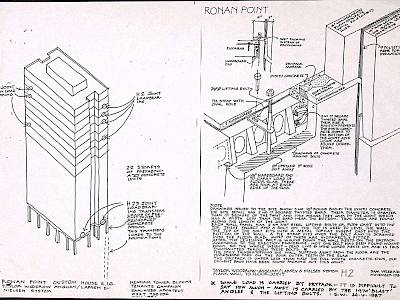
Sam Webb's drawing of joints at Ronan Point, 1986. Credit: RIBA Collections.
Read the whole story “I Knew I Was Right”
Ronan Point, Canning Town, Newham
1983–1988
4 themes
5 related documents
Campaign
Cover-up
Fire and danger
Housing rights
Living conditions
People
Structural
1983–1986
STORY
London
13

“Forensic Demolition”

“Have you heard about the flats?” Everything looked normal as Sheridan Hitchcock walked home from school to Ronan Point on 16 May 1968. Then she turned the corner.
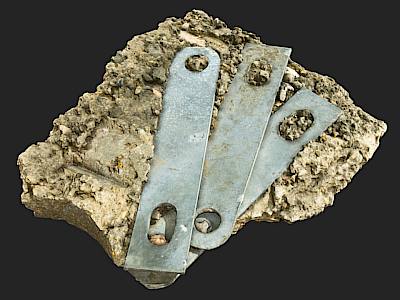
Debris from the forensic demolition of Ronan Point. Credit: RIBA Collections, Factum Arte.
Read the whole story “Forensic Demolition”
Ronan Point, Canning Town, Newham
1983–1986
1 theme
5 related documents
Campaign
Cover-up
Fire and danger
Housing rights
Living conditions
People
Structural
1984–2005
STORY
London
14

“Sir George, Please Give Me a House With a Garden”

On 4 May 1984, Sir George Young, 6th Baronet, and Margaret Thatcher’s Under-Secretary of State for the Environment, came to Ronan Point.1

Newham Tower Block Tenants Campaign. Credit: RIBA Collections.
Read the whole story “Sir George, Please Give Me a House With a Garden”
Ronan Point, Canning Town / Whitehall / London
1984–2005
2 themes
5 related documents
Campaign
Cover-up
Fire and danger
Housing rights
Living conditions
People
Structural
1984–1991
STORY
Scotland
15

“We Can Manage!”

On the Kennishead estate in Glasgow in the early 1980s, seven people died by suicide during an eighteen-month period.1

National Tower Blocks Directory, 1987. Credit: Bishopsgate Institute.
Read the whole story “We Can Manage!”
Kennishead, Glasgow
1984–1991
3 themes
2 related documents
Campaign
Cover-up
Fire and danger
Housing rights
Living conditions
People
Structural
1984–1991
STORY
North of England
16

“Little Chicago”

The Hyde Park Estate rose in the 1960s on the cleared streets of ‘Little Chicago’, the back-to-back houses where Sheffield’s steelworkers’ families had lived for a century. The estate’s ‘streets in the sky’ had been imagined by avant-garde architects. They were sold on a promise: the slum streets and the people who lived in them would be carried up into the air, their communities intact. “The great majority of the local residents,” the architect Jack Lynn wrote in 1965, “could be housed without leaving the district at all.” 1

Tony ‘the ton’ Greaves and Martin, Sheffield, 1998. Credit: Bill Stephenson.
Read the whole story “Little Chicago”
Hyde Park Estate, Sheffield
1984–1991
4 themes
2 related documents
Campaign
Cover-up
Fire and danger
Housing rights
Living conditions
People
Structural
March 1984
STORY
South of England
17

“The Mushroom Competition”

John and Christine Keely of Barking had mushrooms growing out of the walls of their flat. “We pull them off,” said Christine, “but they just keep growing.” 1

‘Bison Bites the Dust!’ in the National Association of Bison Tenants Newsletter. Credit: RIBA Collections.
Read the whole story “The Mushroom Competition”
Dee Road Estate, Reading / nationally
March 1984
2 themes
5 related documents
Campaign
Cover-up
Fire and danger
Housing rights
Living conditions
People
Structural
May 1984
STORY
London
18

“The Questionnaire”

Ron Reilly, chairman of the Pellant Road Tenants Association, lived at 51 Hartopp Point, Pellant Road, Fulham.

Pellant Road Tenants Association Questionnaire. Credit: RIBA Collections.
Read the whole story “The Questionnaire”
Hartopp Point and Lannoy Point, Pellant Road, Fulham
May 1984
3 themes
4 related documents
Campaign
Cover-up
Fire and danger
Housing rights
Living conditions
People
Structural
1985
STORY
London
19

“I Can See More Green Than Most People”

The artist Stephen Willats knocked on every door of Harvey House, a 22-storey tower on the Green Dragon Lane Estate in Brentford. He wanted to build a second tower inside the first. Not of concrete, but of its residents' own lives: what he called a ‘Conceptual Tower’, made from the way the tenants understood their world, rather than the way architects and planners had drawn it.1

Brentford Towers art project, 1985. Credit: Stephen Willats.
Read the whole story “I Can See More Green Than Most People”
Harvey House, Brentford
1985
2 themes
1 related documents
Campaign
Cover-up
Fire and danger
Housing rights
Living conditions
People
Structural
1990s
1991
STORY
London
20

“The Coffin at the Town Hall”

On Monday 29 April 1991, over 200 tenants from Winterton House and Gelston Point marched on Bethnal Green Town Hall bearing a coffin to symbolise the risks their families faced just by living in their homes. Virtually every internal wall surface in the two blocks was made of asbestos sheet.1

Winterton & Gelston Action Group logo. Credit: Bishopsgate Institute.
Read the whole story “The Coffin at the Town Hall”
Winterton House and Gelston Point, Wapping, Tower Hamlets
1991
0 themes
3 related documents
Campaign
Cover-up
Fire and danger
Housing rights
Living conditions
People
Structural
5 April 1991
STORY
North of England
21

“Flames Raced Up Inside the Void”

The fire started in a pile of rubbish at the foot of Knowsley Heights in Huyton, Merseyside.

Cover of The View, Spring 1991. Credit: Bishopsgate Institute.
Read the whole story “Flames Raced Up Inside the Void”
Knowsley Heights, Huyton, Merseyside
5 April 1991
2 themes
1 related documents
Campaign
Cover-up
Fire and danger
Housing rights
Living conditions
People
Structural
February 1993
STORY
London
22

“Wear Hearing Protection in Your Flats”

Brick panels were falling onto Neptune Street from the upper storeys of Columbia Point,  sheets of the building's own skin sliding off and smashing on the pavement twenty floors below. Southwark Council put up protective fans and cantilevered netting systems, to catch debris and protect passers-by.1

National Tower Block Directory, 1992. Credit: Bishopsgate Institute.
Read the whole story “Wear Hearing Protection in Your Flats”
Canada Estate, Neptune Street, Southwark
February 1993
3 themes
1 related documents
Campaign
Cover-up
Fire and danger
Housing rights
Living conditions
People
Structural
2000s
2007
STORY
Midlands
23

“Estates: An Intimate History”

“There is a wall inside your head. The wall is about not knowing what is out there or believing that what is out there is either entirely irrelevant to your life, or so complicated that it would go right over your head if you made an attempt to understand it.” 

Sam Webb's letter to Lynsey Hanley, 2007. Credit: RIBA Collections.
Read the whole story “Estates: An Intimate History”
Chelmsley Wood, Birmingham / Kentish Town, Camden
2007
2 themes
1 related documents
Campaign
Cover-up
Fire and danger
Housing rights
Living conditions
People
Structural
3 July 2009
STORY
London
24

“Stay Put”

On the afternoon of Friday 3 July 2009, a portable television short-circuited in a ninth-floor flat at Lakanal House, a fourteen-storey block on the Sceaux Gardens Estate in Camberwell. The resident had left the room to tend to her baby, who was crying. When she came back, the wall beneath the window was alight. The wall panel – a thin plastic-laminate board, no more fireproof than the television that lit it – burned through within four and a half minutes. With her baby in her arms, she got out and called 999. By the time the first fire engine arrived, flames had taken hold of the building's outside wall across multiple floors.
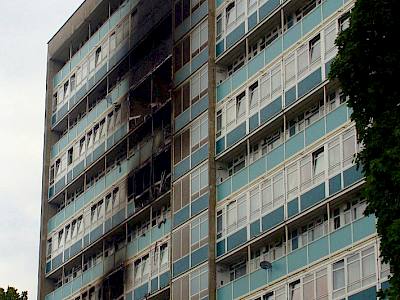
Lakanal House, 2009, photographed by Peter Gasston. Credit: Creative Commons.
Read the whole story “Stay Put”
Lakanal House, Sceaux Gardens Estate, Camberwell, Southwark
3 July 2009
3 themes
2 related documents
Campaign
Cover-up
Fire and danger
Housing rights
Living conditions
People
Structural
2010s
2017–2020
STORY
London
25

“Ledbury Tenants Expose Cracks in the System”

On 14 June 2017, a fire tore through Grenfell Tower in West London. The flames raced up the building's cladding and through gaps that should have held them back. Seventy-two people were killed.
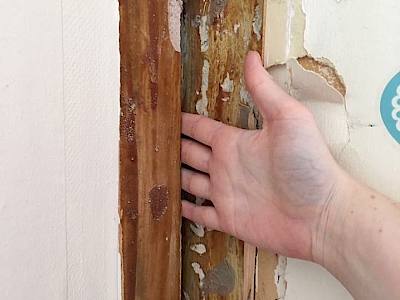
Cracks between the walls of the Ledbury Estate. Credit: Danielle Gregory.
Read the whole story “Ledbury Tenants Expose Cracks in the System”
Ledbury Estate, Peckham, Southwark
2017–2020
4 themes
4 related documents
Campaign
Cover-up
Fire and danger
Housing rights
Living conditions
People
Structural
14 June 2017
STORY
London
26

“Groundhog Day”

“The phone call you've expected for most of your life can still take you by surprise. Especially at half past four in the morning.” Sam Webb was woken by Ronnie King, a retired Chief Fire Officer. “Get up, switch on the TV. There's a tower block on fire in west London. The entire building — every floor.” 1 
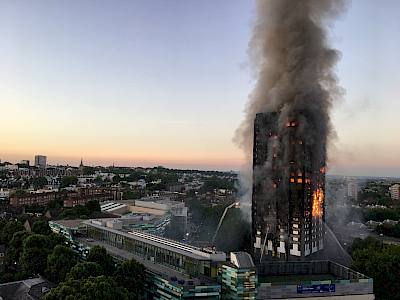
Grenfell Tower, 2017. Credit: Creative Commons.
Read the whole story “Groundhog Day”
Grenfell Tower, North Kensington / Lakanal House, Southwark
14 June 2017
3 themes
1 related documents
Campaign
Cover-up
Fire and danger
Housing rights
Living conditions
People
Structural