“We Can Manage!”
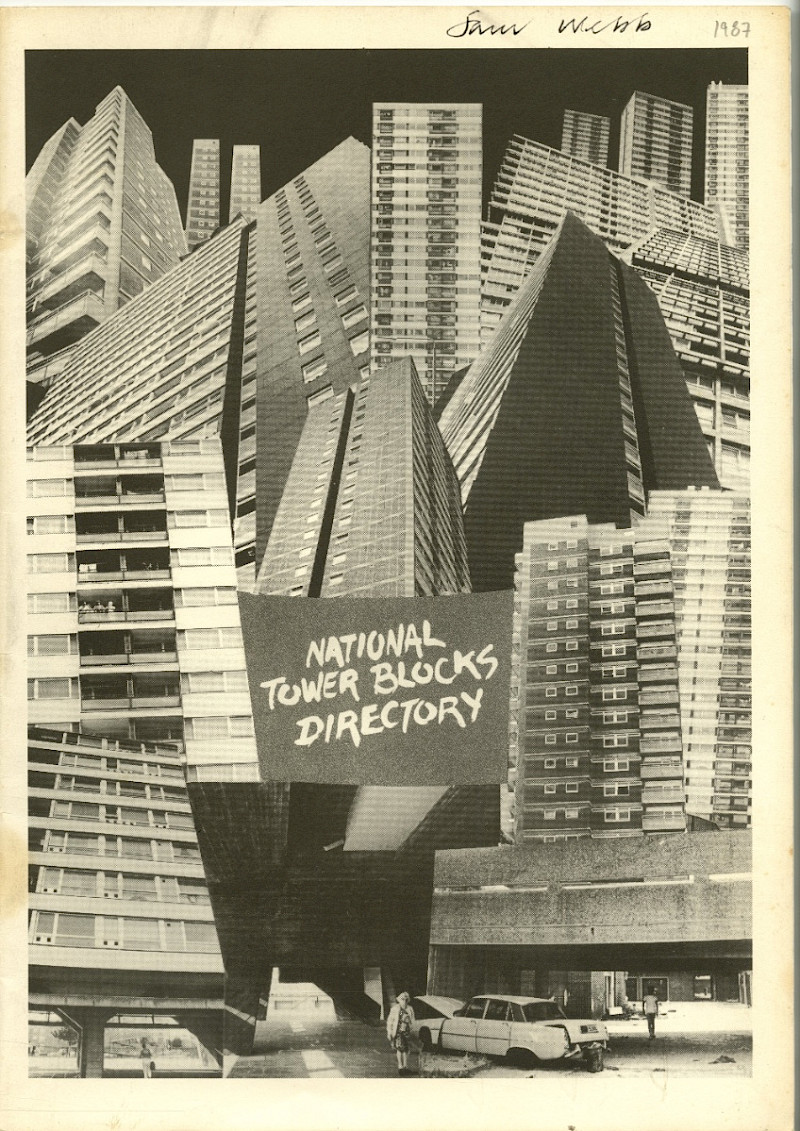
On the Kennishead estate in Glasgow in the early 1980s, seven people died by suicide during an eighteen-month period.1
Five 22-storey tower blocks and five blocks of maisonettes. Geographically isolated. 130 flats standing empty. As the tenants themselves put it, this was an estate that fitted the bleak, windswept image. Its people were afflicted by unemployment, loneliness and depression. Bordered to the north by a members-only golf course that residents couldn't afford to access, Kennishead was marooned, cut off from the rest of the city. Unreliable lifts. Vandalism. Water penetration. Condensation.
The estate was unpopular. The people who were housed there had no other choice; they were the people considered particularly vulnerable, or particularly anti-social. The council's letting policy meant the estate continually emptied and filled with those who had nowhere else to go.
By November 1984, tenants felt things were deteriorating rapidly. They decided the answer to the problems on the estate lay in their own hands.
*"The past situation where the development has been managed by absentee managers has proved not to work in Kennishead,” they explained. “Kennishead should be managed and overseen by the people who live there 24 hours per day." 2
It was not straightforward. Initially there were divisions between tenants in different blocks. As a first step, a group of tenants took over lettings and saw how that worked. Trust began to build across the blocks. In May 1987, the Kennishead Tenant Management Co-operative was formally established.
Taking responsibility for lettings, repairs and maintenance, the Co-operative appointed its own contractor. They negotiated an allowance from the council, employed a full-time administrator and ran an office in one of the blocks. Summer playschemes were organised for the estate’s children. A monthly newsletter kept tenants informed. They secured an environmental grant – enough to paint the unused ground floor flats, tar the footpaths, and fence off the maisonettes, so that people could have their own gardens. Behind the new fences, the hardy, wind-stubborn things that take on a Glasgow estate began to spring up on the bare ground – thrift and geraniums, crocosmia, the odd defiant row of marigolds.
Three hundred tenants came to the Co-operative’s public meetings, where the management committee were elected. Tenants set the priorities. Tenants decided who should be housed where. Tenants were there 24 hours a day.
From 130 voids, Kennishead became an estate with a waiting list.3
- National Tower Blocks Directory 1987 (TBUK2067, p.42), ‘We Can Manage! – Kennishead Tenant Management Co-operative’: seven suicides in 18 months; the bleak windswept image.
- National Tower Blocks Directory 1987 (TBUK2067, pp.42-43).
- National Tower Blocks Directory 1987 (TBUK2067, pp.42-43): the November 1984 decision; formal establishment May 1987; 130 voids reversed; 300 tenants at public meetings; National Tower Blocks Directory 1992 (TBUK2111, p.30): five Bison blocks under one co-operative.
Related Archive Documents
Action Packs
Want to start a community campaign? Here’s a guide to forming or joining a residents’ association.
Annoyed by lift breakdowns? Here’s a digest of the law and steps to effect change.